



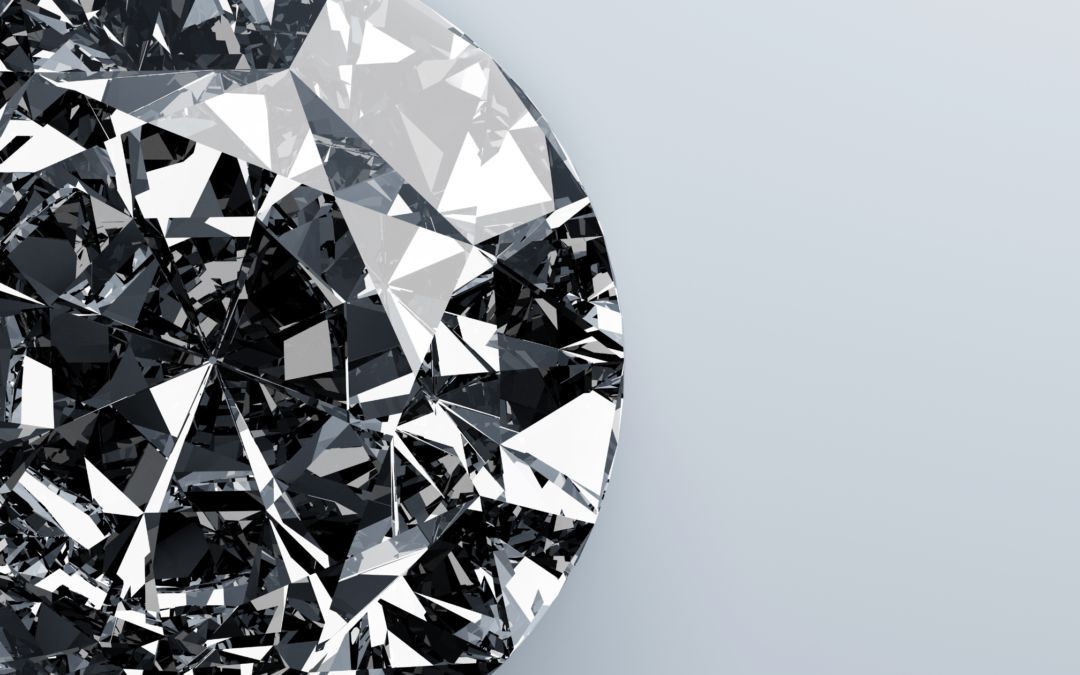
Welcome to South Shore Diamond Exchange’s blog, where we blend our deep expertise with a friendly, conversational approach to guide you through the fascinating world of gemstones. Today, we’re focusing on a common question: How can you tell cubic zirconia from a diamond? Understanding this distinction not only enhances your appreciation of these beautiful stones but also empowers you to make informed choices in your jewelry journey.
Background Information
Cubic Zirconia
- Origin and History: A synthetic gemstone first developed in the 1970s, cubic zirconia (CZ) has gained popularity due to its resemblance to diamond.
- Composition: CZ is created from zirconium dioxide, and fashioned in laboratories to achieve its stunning look.
Diamond
- Formation: Diamonds are miracles of nature, formed under high pressure deep within the Earth over billions of years.
- Characteristics: Known for their unparalleled hardness and brilliance, diamonds are not just a symbol of luxury but also of enduring strength.
Visual Differences
At first glance, CZ and diamonds may appear strikingly similar. Here’s how to spot the differences:
- Appearance: Diamonds often display a unique fire and brilliance, while CZ tends to have more flashes of color.
- Lighting Effects: Under different lighting conditions, diamonds reflect light in a distinct way compared to CZ.
Physical and Chemical Properties
Understanding the science behind these gems can help differentiate them:
- Hardness: Diamonds top the Mohs scale at 10, while CZ is around 8-8.5.
- Refractive Index: Diamonds have a higher refractive index, contributing to their exceptional sparkle.
- Density: Diamonds are denser, which affects how they feel in hand.
- Tests to Differentiate
Here are some simple tests:
- Fog Test: Breathe on the stone. A diamond clears up quickly, while a fog on CZ lasts longer.
- Water Test: Drop the stone in water. A real diamond will sink immediately due to its density.
- Professional Testing: We always recommend professional testing for certainty, using tools like a loupe or electronic testers.
Price and Value Considerations
- Market Prices: Diamonds generally command a higher price due to their rarity.
- Long-term Value: Diamonds typically hold or increase their value over time, making them both a purchase and an investment.
Practical Tips for Buyers
- Ask Questions: When purchasing, inquire about the stone’s origin, treatment, and certification.
- Certification and Appraisal: Always opt for certified stones and get them appraised.
- Online vs. In-Store Shopping: Each has its advantages, but nothing beats seeing a stone in person.
Conclusion
Identifying the differences between cubic zirconia and diamond can be a rewarding experience, and we at South Shore Diamond Exchange are here to assist you every step of the way. Remember, whether you choose a dazzling diamond or a stunning cubic zirconia, each stone has its unique charm and beauty.
For more questions, visit our FAQs section on our blog. We encourage you to explore more on this topic through our recommended readings and resources.
Remember, at South Shore Diamond Exchange, it’s not just about selling jewelry; it’s about educating and assisting our customers in making choices that bring them joy and satisfaction.
Visit our website, check out our other blog posts, or schedule an appointment with our experts to learn more. We are here to help you create your own beautiful story with the perfect piece of jewelry.