



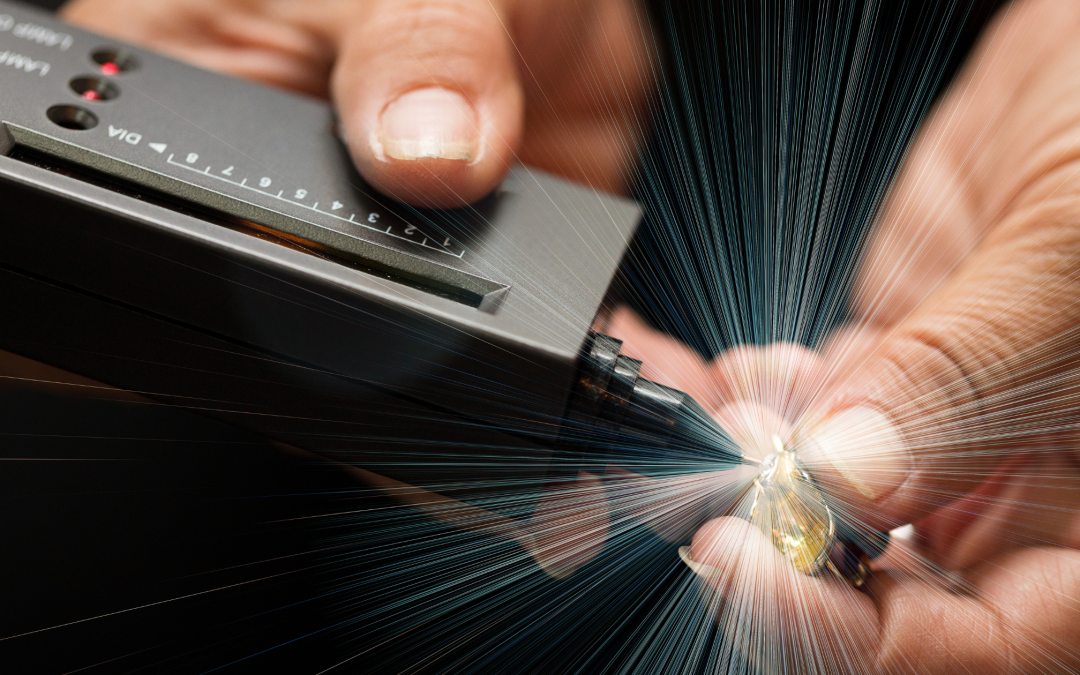
A diamond tester is a handheld device designed to verify the authenticity of a diamond based on its thermal conductivity—that is, how quickly heat passes through the stone. Because diamonds conduct heat differently than most other gemstones, this property allows testers to distinguish real diamonds from common imitations.
Whether you’re curious about a piece in your personal collection or looking to verify the authenticity of a recent purchase, learning how to use a diamond tester correctly can provide valuable peace of mind.
At South Shore Diamond Exchange, we believe knowledge is power—and we’re here to help you feel confident every step of the way. In this guide, we’ll walk you through what a diamond tester is, how it works, and how to use one effectively at home or in a retail setting.
What Does a Diamond Tester Do?
A diamond tester works by measuring how well the stone conducts heat—or in more advanced models, electrical conductivity as well.
Why this matters:
- Real diamonds have high thermal conductivity
- Imitations like cubic zirconia or glass do not
- Moissanite, a common diamond simulant, conducts heat similarly—but can be detected using electrical testing
So, the main function of a diamond tester is to give a quick, first-level identification of your stone, separating diamonds from fakes.
Who Uses Diamond Testers—and Why?
Jewelers and appraisers use them for quick, on-the-spot evaluations
- Collectors and enthusiasts use them to check authenticity at home
- Buyers of vintage or secondhand jewelry rely on them before making a purchase
- Retailers and pawnshops use them to verify incoming inventory
While the tester is a helpful tool, it’s not a substitute for professional certification or lab analysis. Think of it as a reliable screening tool that helps eliminate uncertainty quickly.
How to Use a Diamond Tester (Step-by-Step)
Using a diamond tester is easy—but small missteps can result in misleading readings. Here’s how to do it properly:
1. Turn On and Warm Up the Device
Make sure the tester is fully charged or has fresh batteries. Wait for it to reach operating temperature.
2. Clean the Stone
Wipe away any dirt, oil, or fingerprints. Clean stones produce more accurate results.
3. Secure the Jewelry
Lay the ring, earring, or loose stone on a flat, non-metallic surface. Hold it steady without touching the setting or stone with your fingers.
4. Touch the Probe to the Stone
Gently place the tester’s tip on the flat surface (table) of the gemstone. Hold it steady for a few seconds.
5. Read the Results
- Positive reading (beep/light/scale): Diamond
- Negative reading: Not a diamond
- Moissanite alert (if dual-mode tester): Likely moissanite, not diamond
Understanding the Results: What the Tester Tells You
A diamond tester gives you a yes/no answer—is the stone a diamond or not?
What it does tell you:
- If the stone is a diamond (based on thermal/electrical conductivity)
- If it’s likely an imitation like CZ or glass
- If it could be moissanite (in models that test electrical conductivity)
What it doesn’t tell you:
- Whether the diamond is natural or lab-grown
- Whether it’s high quality in terms of clarity, cut, or color
- The carat weight or value of the diamond
For complete accuracy, professional tools and gemological lab reports remain the gold standard.
Limitations to Be Aware Of
Even the best diamond tester has its limits:
- It can mistake moissanite for a diamond if it only measures heat
- It won’t detect lab-grown diamonds, as they have the same conductivity as natural ones
- It can be thrown off by dirty surfaces, touching the metal setting, or low batteries
This is why a diamond tester should be used as part of a broader evaluation process, not the sole test.
Additional Consideration: Can Diamond Testers Detect Lab-Grown Diamonds?
No—standard testers cannot distinguish between natural and lab-grown diamonds. Because both have identical chemical and thermal properties, they test the same.
To verify origin, a diamond must be evaluated by a gemological lab and accompanied by a certificate.
At South Shore Diamond Exchange, we offer diamonds with trusted documentation so you can feel confident in every carat.
When to Bring Your Diamond to a Professional
Home diamond testers are helpful—but they’re not a replacement for a trained eye. If you’re unsure about your results or want formal documentation, book an appointment with our team.
At South Shore Diamond Exchange, we offer:
- In-store authenticity checks
- Professional cleaning before testing
- Custom appraisals and gemstone consultations
- Resetting or resizing services for verified diamonds
We’re always happy to guide you through the process, whether you’re confirming an heirloom, validating a gift, or preparing to buy.
Final Thoughts: What a Diamond Tester Is—and Isn’t
A diamond tester is a valuable tool, but not a comprehensive solution. It tells you whether a stone conducts heat like a diamond—but not its origin, grade, or full value.
For day-to-day checks, it’s a fast and functional tool. For formal purchases or inheritance pieces, trust a certified jeweler with the expertise and equipment to give you a full picture.
At South Shore Diamond Exchange, we offer not just beautiful jewelry—but the education, experience, and personalized service to help you choose with confidence.
South Shore Diamond Exchange
125 Church St, Unit 40-50, Pembroke, MA 02359.
(781) 829-0060