



You may have been unaware that diamonds come in different colors. These colors are all caused by natural effects during the forming process. The color of a diamond can be a large factor in the value of the gem.
Diamond Color and Scale
Most diamonds on the market range from clear to yellow. Diamonds with more color tend to be less expensive than clear diamonds.
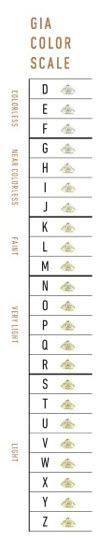
There is a scale known as GIA’s D-to-Z measurement system. Diamonds on the D side of the scale are completely clear and as the scale slides down to Z, it goes from clear to darker hues of yellow. The varying hues of clarity in a diamond can be incredibly hard to detect when they are next to one another on the scale, so it’s important to have a professionally trained eye judge the grade of a diamond. The GIA scale is universally accepted and is the best means of categorizing diamonds. You can view the scale in full here.
What Causes Diamond Color?
In their purest form, diamonds are clear, but when they have impurities such as trace amounts of sulfur, nitrogen, and boron they will have color. Other causes for diamonds to have color can be from structural defects of the bonds which make up the diamond or if they were formed near radioactive rocks or material.
Extremely Rare Diamond Colors
Some diamonds, when they’ve been contaminated with certain chemical impurities, can have brilliant colors. These diamonds are incredibly rare and have a much higher value than most of the diamonds on the GIA scale.
These diamonds aren’t included on the GIA scale as they are put into their own category of fancy-color diamonds. The Hope Diamond is an extremely famous blue diamond that holds incredible value while the Royal Purple Heart is one of the largest purple diamonds in the world.